

Recently, I’ve been watching Seth Rogen and Evan Goldberg’s new satirical comedy series The Studio on Apple TV. In the second episode, “The Oner”, a squirm inducing comedy of errors highlights just how challenging a oner can be. (Note, The Studio uses a lot of oners itself). This got me thinking; is a oner really a badge of honour for an auteurist director? Or, is it just a flashy gimmick made to impress cinephiles?
A one-take scene, often referred to as a oner or a long take, is an uninterrupted shot. It involves a lot of collaboration between cast and crew. There’s no particular criteria in terms of how long a scene has to last to be a oner, although some people think a minimum of 45 seconds. It usually requires tracking shots and complex blocking, as well as precise timing. A oner is a difficult shot that requires meticulous planning. This begs the question, if it’s so much of a headache to film then why bother?
I will break this section down into three parts: functionality, immersion, and theatre.
Functionality
Long takes aren’t always style over substance. They can be very functional, especially in terms of exposition. Let’s consider this scene in Shaun of the Dead (2004) [dir. Edgar Wright]. We see Shaun leave his house, go to the local shop and return, all the while oblivious to what surrounds him. This scene is so functional it’s almost utilitarian. Firstly, there’s quite clearly a zombie apocalypse going on. Secondly, Shaun is seemingly unaware of the fact and carries on business as usual. The scene is full of little details for the audience. Thirdly, it draws a direct comparison between Shaun and the zombies, as established in the opening sequence. This tracking scene is also directly comparable to the earlier scene. The long-takes are also complimented by Wright’s quick cuts, which completely set the tone for the film.
It’s also worth mentioning Last Night in Soho (2021) [dir. Edgar Wright]. Take a look at this dancing scene. When I first saw this scene, I presumed it was cut and edited to facilitate the switching between the characters of Ellie and Sandie. However, when I watched the making-of feature, I learned the shot was actually devised by cinematographer Chung Chung-hoon and consisted of one Steadicam and very clever choreography. The ultimate effect is a dreamlike sequence that brings us onto the next topic, the immersive experience of the long-take.
Immersion
What’s the first film that comes to mind when you think of a oner? For me, it’s Children of Men (2006) [dir. Alfonso Cuarón]. Children of Men is a contextually rich film, almost no time is wasted without framework or detail. In the film’s culminating shoot out, Theo is trying to make it through an attack by running through rubble and ducking for cover in this six minute plus take.
Out of all the remarkable long-takes in the film, this one for me is the most immersive. It manages to feel both exposed and claustrophobic in a cacophony of anxiety. The time it takes an injured Theo to cross relatively short distances feels so uncomfortable because it’s real. Even the famous mistake of the blood on the camera lens doesn’t detract from the immersion of the scene because the long-take allows the film’s storytelling capability to become overtaken by its atmosphere.
Theatre
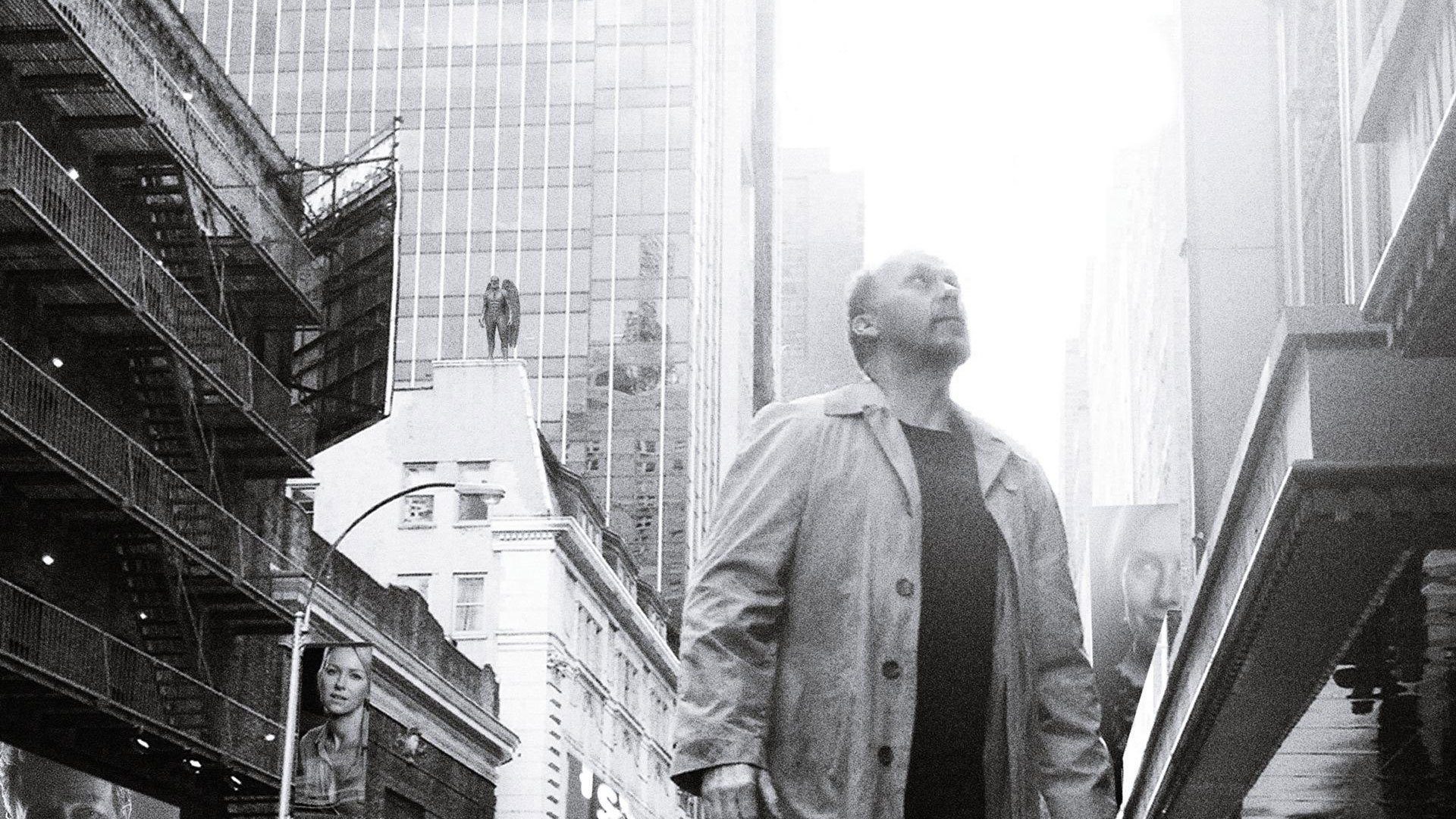
The long-take mimics live theatre in a way that isn’t often expressed through film. The long-take is, largely, happening in real time. Some films are made to look like they are entirely made up of one take, cleverly stitched together like Birdman or (The Unexpected Virtue of Ignorance) (2014) [dir. Riggan Thomson]. It has a palpable choreography punctuated by the incessant beating drums that underlie it’s narrative.
In the film 1917 (2019) [dir. Sam Mendes], the battlefield scene is incredibly theatrical. There are so many people in the scene, and the way they interact with one another (intentionally or otherwise) adds a layer of authenticity that would be very different if it was, for example, interspersed with close up scenes, because it removes the scale as well as its organic form.
Imagining the same long-take scenes I’ve outlined above with cuts takes so much away from them, but that’s only because they were there in the first place. Considering live theatre, the long-take elevates tension; time, danger, or curiosity.
This scene from Atomic Blonde (2017) [dir. David Leitch] clocks in at around ten minutes and, although it’s subjective, I think the long-take element is largely ineffective. A long-take needs to be well choreographed, but this scene feels over choreographed, almost as though you’re watching a rehearsal. The only thing to look at is fighting and the occasional roll around the floor. It’s technically fine, but it doesn’t contribute towards the film in a meaningful way. In this case, the scene could have been elevated by utilising other techniques to build tension, for instance, quick cuts, sound design, and more engaging visuals.
On the whole, I think long-takes are pretty cool. They are a great way of getting more information into a scene, and I love the relevancy that they can introduce into a narrative through means of textuality and simultaneous situations. If there’s not enough going on in the scene, they can be unengaging. Long-takes that don’t immediately read as long-takes because you are so absorbed in the film’s narrative world seem to be the best kind.
 Screen Waffle