
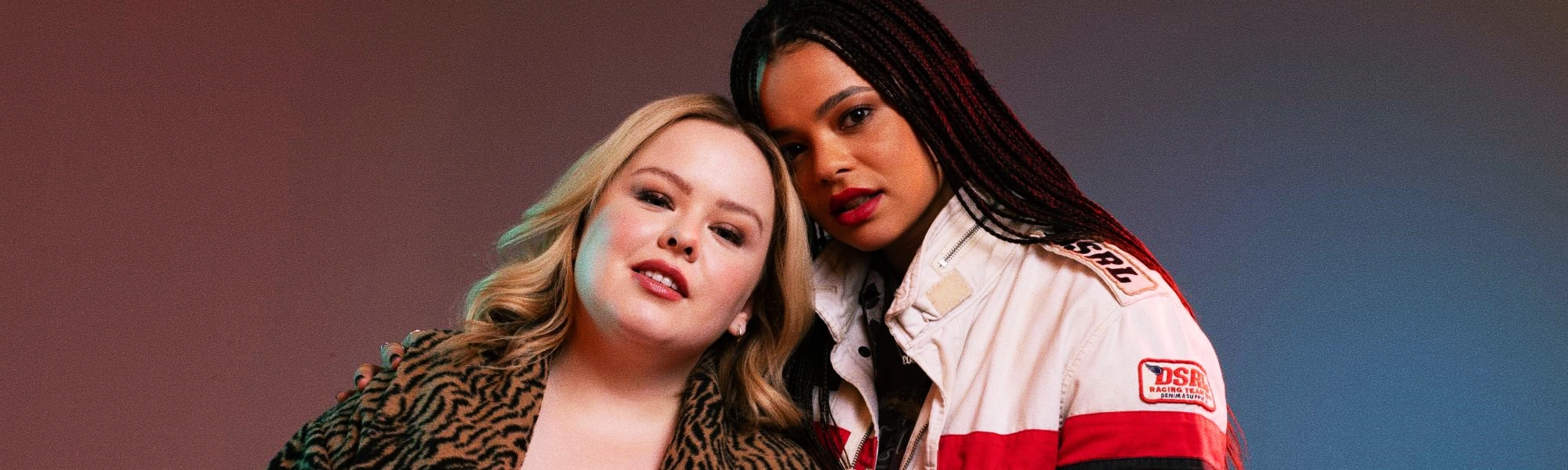

Big Mood is a comedy series written by Camilla Whitehill and directed by Rebecca Asher. It was released on Channel 4 at the end of March this year. The series stars Nicola Coughlan [Derry Girls] as Maggie and Lydia West [It’s a Sin] as Eddie, best friends who live in Dalston. Supporting cast members include Ukweli Roach, Eamon Farren, and Robert Gilbert.
With six episodes in this first season, at a runtime of under half an hour each, the series exclusively follows the lives of Maggie and Eddie and how their friendship is shaped by their experiences. Maggie, who has bipolar II disorder, is introduced as chaotic and impulsive, telling the audience she is experiencing a manic episode, whilst Eddie is struggling to run the bar she and her brother inherited from their father.
Whitehill has stated, in relation to Big Mood, that she doesn’t really know what the message is, preferring to focus on making the “best, funniest show” she can. I think this is evident when watching the series, as it seems the main objective was to use mental illness in a way that increases visibility without dominating too much of the narrative aspect.
I found the storyline a bit odd, as though Big Mood was trying to follow a few different comedy formats simultaneously. Some episodes felt like when a series puts its characters in certain environments or situations for hijinks to ensue without an overarching narrative arc, yet development is really important to Big Mood, with the events moving forward in a more dramatic style, i.e. the story progresses from one event to another. It felt a bit like a condensed soap opera at some points, and the main theme, which is friendship, got lost in the weeds.
The first episode is so tonally different from the series finale, that whilst it does illustrate the change in Maggie and Eddie’s friendship, it seems almost like a completely different show. I did consider that perhaps the fluctuating nature of the show is supposed to be representative of Maggie’s health, but it seems like a feeble argument to patch up narrative hiccoughs. Although ticketed as a comedy, Big Mood is firmly within the dramedy category. Whitehill states she concentrates on a comedy-first approach, believing any topic is open to comedy as long as it’s explored with compassion, however I think this approach has taken the form of using drama rather than comedy in the more emotional parts of the show.
Coughlan and West’s performances are engaging and enjoyable, but their characters lack nuance and depth. The writing was witty and sharp in places, but it doesn’t strike as new or daring, instead following in the footsteps of numerous prior dramedies. I think quite a few of the series’ problems come down to awkward storytelling.
Big Mood is definitely worth a watch for the performances and funny moments but there is a niggling annoyance at what the series could have been.
Rating: 6/10
 Screen Waffle